




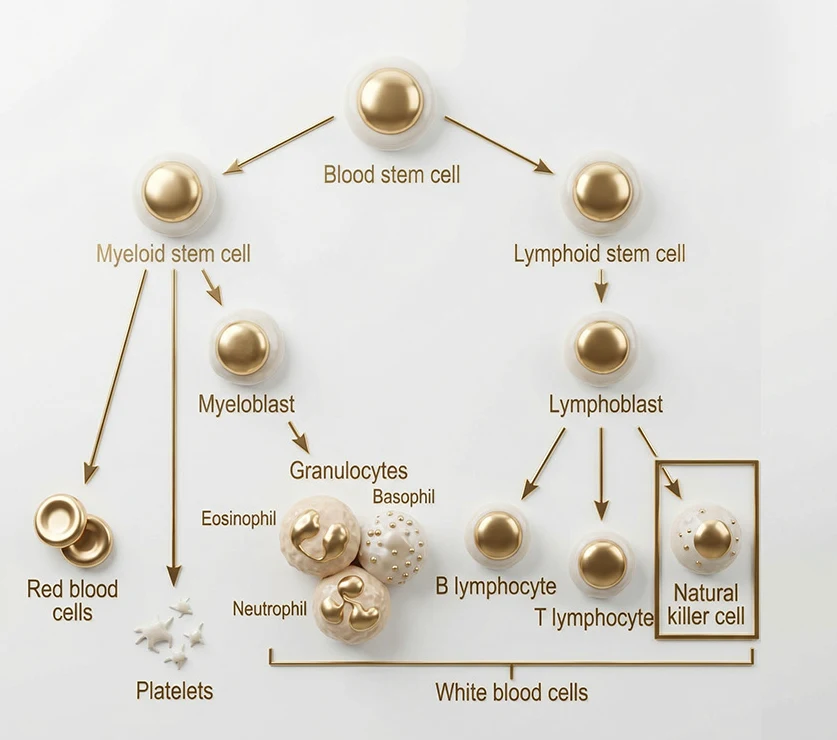
What Is NK Cell Therapy
and Why Is It Important?
- Known as “killer cells” or “assassin cells”
- A type of white blood cell that is part of the innate immune system
- Comprises approximately 10–15% of lymphocyte white blood cells
- Unlike other immune cells, NK cells do not require prior activation or recognition of foreign substances, allowing them to efficiently and rapidly destroy abnormal cells, pathogens, and cancer cells more effectively than many other types of white blood cells
Main Functions of NK Cell Therapy

Elimination of Cancer Cells
(Immunosurveillance)
Enhances treatment efficacy, helps reduce disease progression, and supports the prevention of cancer recurrence.
Prevention and Elimination of
Foreign Substances
Pathogens, especially viral infections
(Prevention & Viral Control)
Elimination of Abnormal Cells
Aging cells and senescent cells
(Immune Rejuvenation)
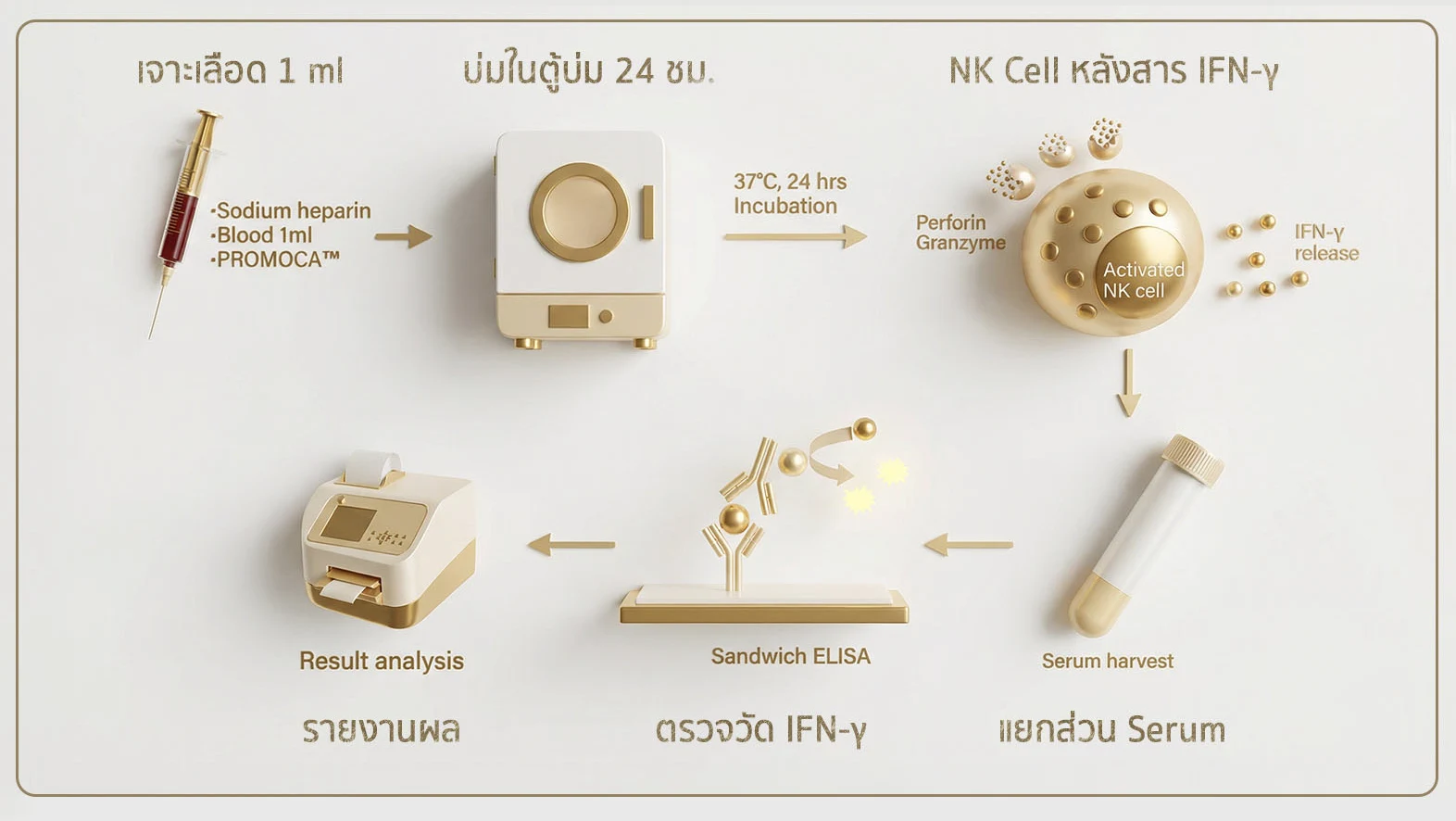
NK Activity Test Procedure
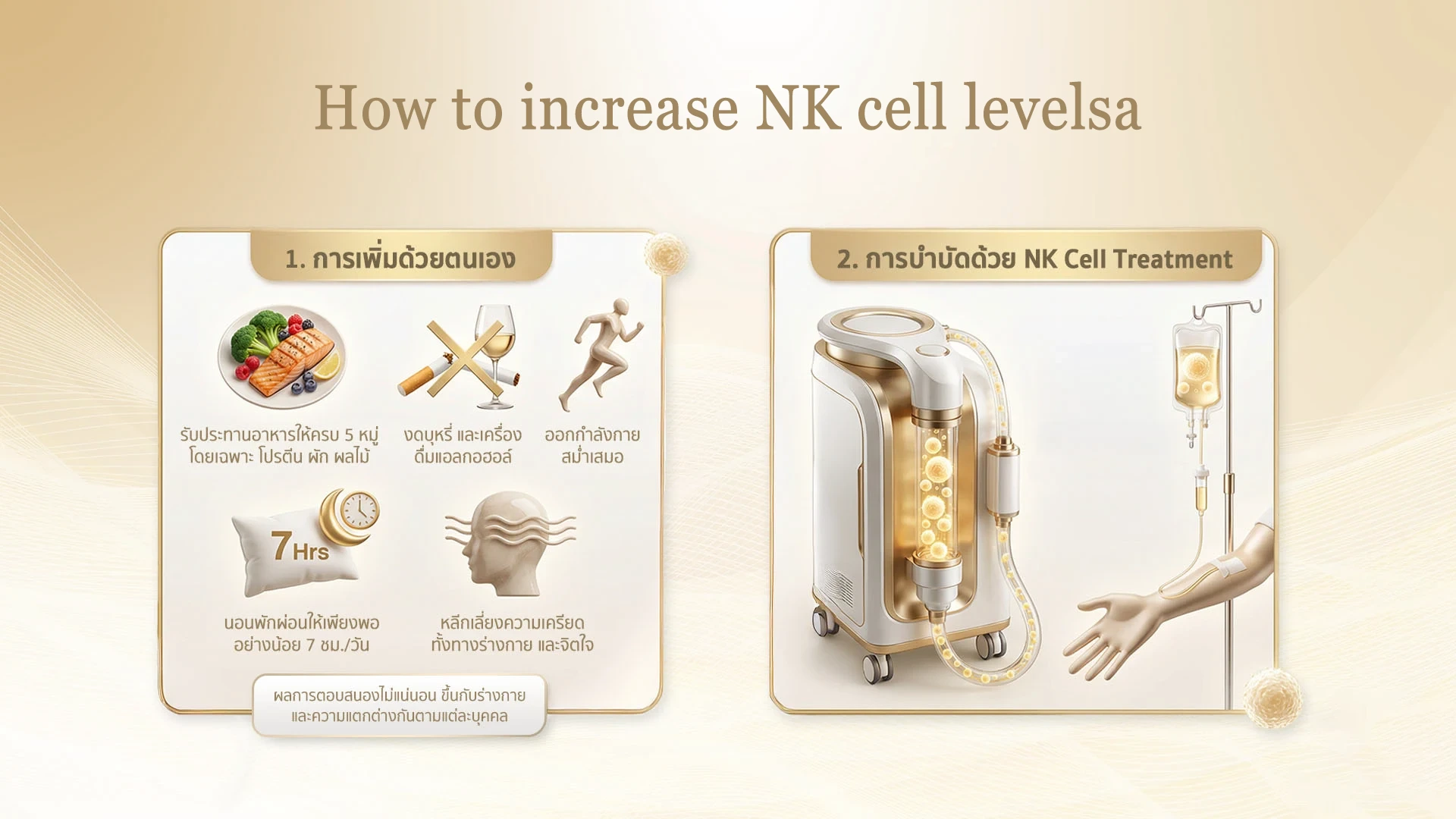
‘Dosage and Frequency’ of Treatment
- Administered intravenously (IV infusion)
- Treatment case: Given every 2 weeks for 6 cycles, in combination with primary cancer treatment. Frequency may be adjusted depending on cancer type and ongoing treatment plan.
- Preventive case: Given every 3–6 months, with frequency adjusted according to NK cell activity levels.

Frequently Asked Questions
How many sessions of NK Cell Therapy are typically recommended?
- Prevention: Is it sufficient to receive 2 sessions per year?
- Cancer cases: 6 sessions administered every 2 weeks. If the patient is also undergoing chemotherapy or radiotherapy, treatment planning should be coordinated with medical specialists.
Is NK Cell Therapy safe?
NK cells are considered highly safe because they are derived from the patient’s own body,
expanded, activated, and trained to enhance their function before being reintroduced into the body.
Are there any side effects?
Side effects are minimal or almost none. In some cases, only mild and temporary symptoms may occur,
which typically resolve on their own within 24 hours.
Can it replace chemotherapy or primary cancer treatment?
Combining NK Cell Therapy with chemotherapy or radiotherapy is often considered a “gold standard” supportive approach in cancer care. It works as an adjunct therapy that helps enhance immune function, reduce treatment-related side effects, and support faster recovery.
How long do NK cells last after therapy?
Duration varies from person to person. According to research from Japan, the effects may last for approximately 6 months.